

Data Centre World Asia 2026
Key trends in cooling and power infrastructure for AI data centers
| Item | Details |
|---|---|
| Event | Data Centre World Asia 2026 (12th edition) |
| Dates | 29 – 30 September 2026 |
| Venue | Marina Bay Sands Expo & Convention Centre, Singapore |
| Prepared by | Bui Quang Xuan – Chairman of VDCC |
| Report date | 4 October 2026 |
| Scope | Liquid cooling, Testing & Commissioning, power quality for AI loads, DC distribution, Solid-State Transformers (SST) |
1. Executive Summary
The 2026 show delivered one clear message: data center infrastructure is being redesigned around AI workloads. High heat density is making liquid cooling mandatory, while highly dynamic loads and rack densities of several hundred kW up to 1 MW are pushing power systems from conventional AC towards 800 V DC architectures. Five key highlights:
| # | Trend | Maturity | Design implication |
|---|---|---|---|
| 1 | Direct-to-Chip (D2C) liquid cooling dominates; immersion remains rare | Commercial, mainstream | D2C is the default for AI halls; TCS/FWS and CDUs must be designed in from concept stage |
| 2 | Liquid-cooled load banks for T&C / TCCF (Avtron – Legrand) | Commercial | Include in commissioning specs to test real heat load on the water loop |
| 3 | Compensation / energy storage integrated in the UPS to absorb AI pulse loads (Delta) | Commercial, spreading | Millisecond-to-second load swings must be considered when sizing UPS, generators and transformers |
| 4 | Hybrid AC/DC PDU with no-shutdown changeover (ABB) | Newly launched | A migration path from AC to DC within the same hall |
| 5 | SST: 10/11/13.8 kV AC → 800 V DC (ABB, CHINT, Delta…) | Pilot stage | Eliminates LV transformer + UPS; requires BESS. Wider adoption expected 2027–2029 |
2. Key Highlights in Detail
2.1. Liquid cooling: Direct-to-Chip dominates, immersion still scarce
Observations at the show
• Compared with 2025 (only a handful of exhibitors), this year the number of booths showing D2C solutions rose sharply: CDUs (in-rack and in-row/liquid-to-liquid), cold plates, manifolds, quick disconnects, and complete “chip-to-chiller” packages.
• Immersion cooling was largely absent: 1–2 companies last year, and very few again this year. One notable exception: LG presented immersion as part of its chip-to-chiller package[10].
Why is D2C winning?
• Leading GPU platforms (NVIDIA GB200/GB300 NVL72 and successors) are designed for D2C cold plates, and server OEM warranties are based on this configuration.
• D2C keeps rack form factor, cabling and operations largely familiar; immersion requires major changes to floor, structure, maintenance procedures and fluid–material compatibility.
• The D2C supply chain (CDUs, cold plates, QDs) has matured, with many vendors and easy competitive tendering.
Design considerations
• D2C typically captures only about 70–85% of rack heat; the remainder still needs air cooling (hybrid air + liquid design).
• Fix TCS/FWS supply temperature early (e.g. ASHRAE W32–W45 classes) to optimize chillers, free cooling and heat recovery.
• TCS water quality: fine filtration (typically 25–50 μm), chemical treatment, conductivity monitoring, and a flushing plan before servers are connected.
• CDU redundancy (N+1), pump arrangement and piping must meet Concurrently Maintainable requirements if targeting Tier III.
2.2. Liquid-cooled load banks for Testing & Commissioning
Avtron (a Legrand company) exhibited the LC35 Liquid Cooled Load Bank: a resistive AC load bank rated 500 kW, CE-rated for EMEA and Asia, stackable two-high, with stainless steel components; a single controller can connect and control up to 250 Avtron air- and liquid-cooled load banks[1][2]. The LC20 range adds a 720 kW configuration[1].
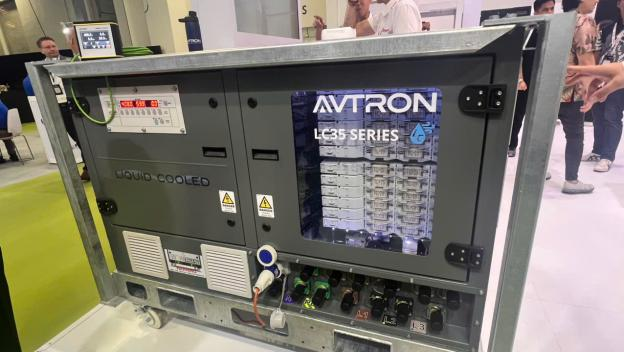 Figure 1. Avtron LC35 Liquid Cooled Load Bank (Legrand) |
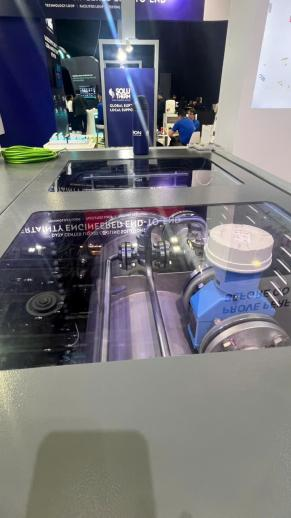 Figure 2. Internals: piping and flow meter |
Why it matters
• With D2C, heat goes into water, not air. Conventional air-cooled load banks cannot verify CDUs, TCS, FWS or chillers. A liquid-cooled load bank creates a real heat load directly on the facility water loop[1].
• It enables verification of the right parameters: flow rate, ΔT, differential pressure, valve/pump response, and failure scenarios (CDU loss, pump loss, source transfer) during IST (Level 5).
• It directly supports TCCF (Uptime Tier Certification of Constructed Facility), where the facility must demonstrate design load and redundancy as per the TCDD documents.
Recommendations
• Specify liquid-cooled load banks in the T&C scope from the tender stage (quantity, kW, quick-connect points on manifolds/TCS).
• Provide tap-offs/isolation valves on the TCS so load banks can be connected without cutting pipework later.
• Distinguish two levels: facility-level load banks (hundreds of kW, connected to TCS/FWS) and rack-level heat-load emulators (simulated cold plates, connected to rack manifolds).
2.3. Power compensation integrated in the UPS for pulsed AI loads
Delta showed an energy storage module cabinet installed within the UPS line-up to compensate power when AI servers ramp up or down abruptly during training or inference. It complements Delta’s Ultron DPM Gen-2 UPS platform (250–2,500 kVA, SiC technology, up to 97.5% efficiency in double-conversion mode) and UZR3 Li-ion battery cabinets[11].
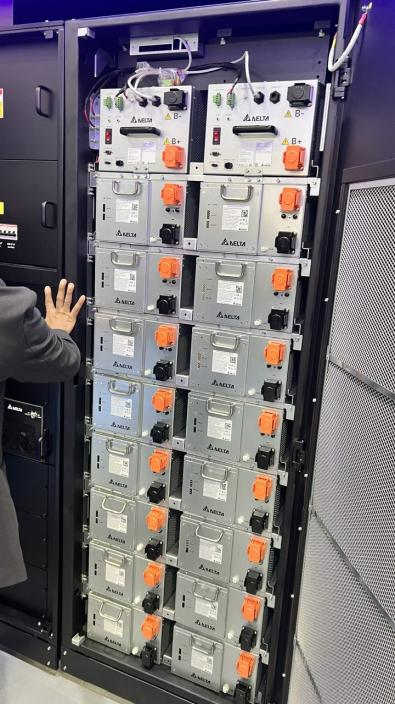
Figure 3. Energy storage / compensation modules integrated in the UPS system (Delta)
The underlying problem
• According to NVIDIA, an AI rack’s power can swing from around 30% (idle) to 100% and back within milliseconds; at data hall scale, swings can reach hundreds of MW within seconds[3].
• Root cause: GPUs synchronize at each compute step (compute → data exchange → checkpoint), so the whole cluster ramps up and down simultaneously.
• If unmitigated: UPS and generators must be sized for peak rather than average, voltage/frequency fluctuations, protection trips, mechanical resonance in generators, and non-compliance with the utility grid code.
Solutions on the market
| Level | Solution | Examples |
|---|---|---|
| In PSU/rack (ms – s) | Capacitors / supercapacitors in the power shelf | GB300 NVL72: 65 J/GPU, ~30% lower peak demand seen by the grid[4]; Delta Power Capacitance Shelf using lithium-ion capacitors (LIC), 15 s @ 20 kW[5] |
| In UPS/electrical room (s) | Storage/compensation modules integrated in the UPS | Delta product at the show (Figure 3) |
| Facility level (s – min) | BESS at the grid connection point | NVIDIA 800 VDC architecture[3] |
Key design considerations
• Require server vendors to provide a dynamic load profile (amplitude, frequency, ramp rate), not just nameplate power.
• Select UPS rated for repetitive pulse loads; check charge/discharge cycle life of batteries/capacitors under continuous cycling.
• Verify generator transient response (ISO 8528 G3) against AI load steps; consider operating in parallel with BESS.
• Coordinate with the utility on flicker, harmonics and ramp rates for projects of tens of MW.
2.4. Hybrid AC/DC PDU with no-shutdown changeover
ABB presented a PDU that can switch between AC and DC supply (and back) without shutting down the system: the changeover is performed by hot transfer between circuit breakers, so the load remains continuously energized throughout. Inside are dedicated ABB S800 DC breakers rated 800 V d.c. (Figure 4). This is part of the Infinitus DC portfolio ABB announced on 21 September 2026[6].
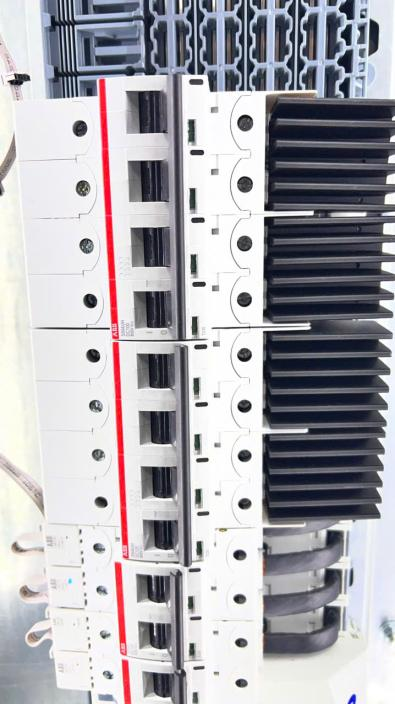
Figure 4. ABB S800 DC breakers (800 V d.c.) in the AC/DC PDU
Significance
• Hot transfer between breakers: no need to de-energize the whole panel, reducing downtime risk and supporting Concurrently Maintainable requirements during maintenance or changeover.
• Solves the transition problem: a hall can run AC racks today and move to 800 VDC racks when the next server generation arrives, without replacing the entire electrical room.
• Well suited to phased build-outs, keeping flexibility while the future GPU generation is still uncertain.
Technical notes on DC
• DC current has no zero crossing, so arcs are harder to interrupt than with AC: switchgear must be properly DC-rated; consider solid-state circuit breakers (SSCB) for μs-level interruption.
• Define the DC earthing scheme (e.g. ±400 V with mid-point grounding) and the ground-fault detection strategy.
• Ensure selectivity between DC protection levels; address electrical safety and operator training for 800 V DC environments.
2.5. Solid-State Transformer (SST): medium voltage straight to 800 V DC
This was the most notable highlight of the show. Several vendors (ABB, CHINT, Delta…) demonstrated SSTs converting 10/11/13.8 kV AC directly to 800 V DC, replacing the LV transformer, UPS and rectifier in one step.
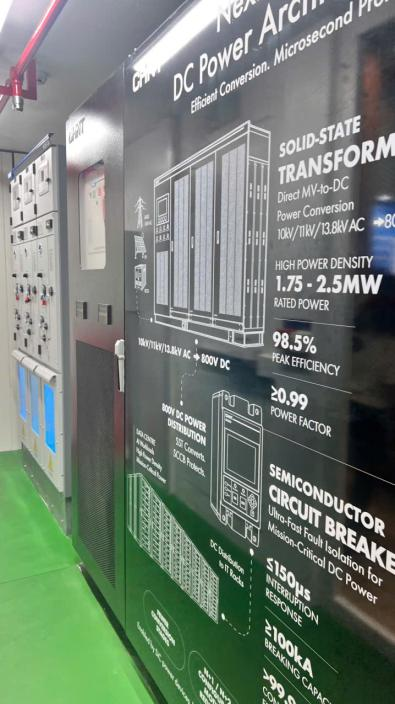
Figure 5. DC architecture with SST and solid-state circuit breaker (CHINT)
Typical specifications (CHINT, per booth display)
| Parameter | Value |
|---|---|
| Input / output voltage | 10 / 11 / 13.8 kV AC → 800 V DC |
| Rated power | 1.75 – 2.5 MW per unit |
| Peak efficiency | 98.5%[13] |
| Power factor | ≥ 0.99 |
| Solid-state circuit breaker (SSCB): interruption time | ≤ 150 μs |
| SSCB: breaking capacity | ≥ 100 kA |
800 VDC shortens the power conversion chain from grid to GPU
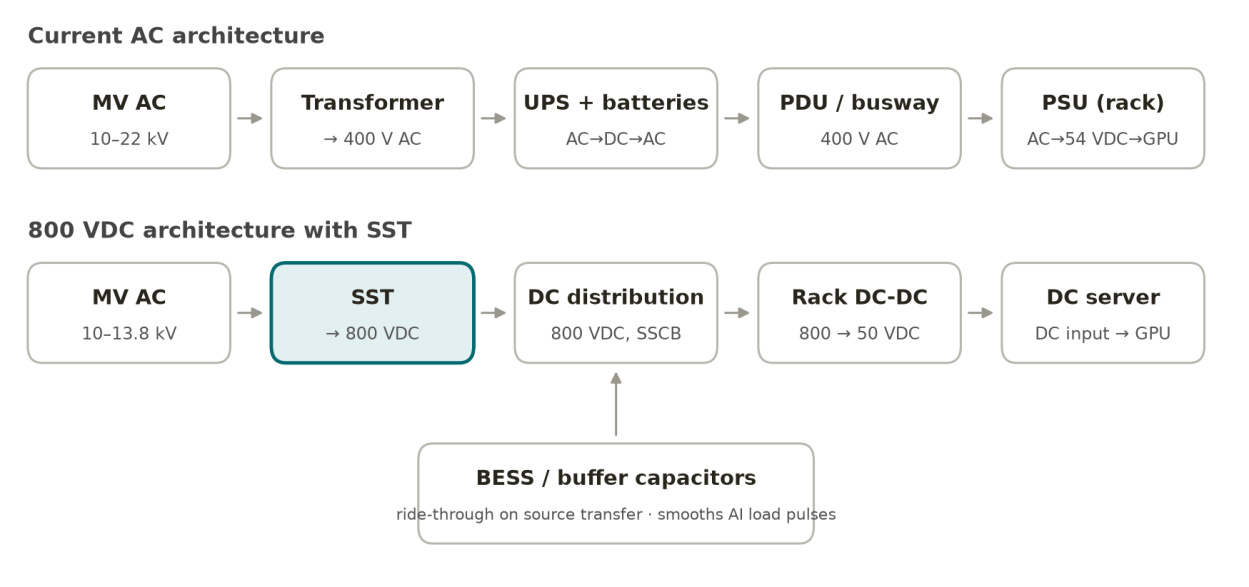
Figure 6. The SST replaces both the transformer and the AC UPS; the ride-through role moves to BESS and buffer capacitors on the DC bus (simplified illustration)
SST vendor landscape
| Vendor | Published information | Status |
|---|---|---|
| CHINT | 1.75–2.5 MW; 98.5% peak efficiency; PF ≥ 0.99; bidirectional power; with solid-state breaker interrupting in ≤ 150 μs, ≥ 100 kA (per booth display) | Previewed at DCW Asia 2026; official launch planned for late 2026[14] |
| ABB | Infinitus SST + 800 VDC distribution and protection; vendor cites >5% higher end-to-end efficiency[6] | Portfolio launched Sep 2026; several components entering production[15] |
| Delta | 72 kW AC → 800 VDC power shelf (98%)[17]; 90 kW 800 → 50 VDC DC/DC shelf (98.5%)[16] | NVIDIA component partner for 800 VDC[16] |
| Siemens + Reinhausen | Modular SST up to 36 kV input, 800 VDC output[18] | Under development (Aug 2026)[18] |
Conventional AC vs. 800 V DC architecture
| Criterion | Conventional AC | 800 V DC with SST |
|---|---|---|
| Conversion chain | MV → transformer → LV AC → UPS (AC/DC/AC) → PDU → PSU (AC/DC) → 54 V | MV → SST → 800 V DC → DC/DC in rack |
| Conversion stages | Many (4–5) | Few (2–3) |
| End-to-end efficiency | Baseline | >5% higher per BCG/ABB[6] |
| Cabling / copper | Heavy (high current at 415 V) | Much lower; 2 conductors, lower current |
| Backup | UPS + batteries | No UPS; BESS + capacitors/supercapacitors |
| Maturity | Very high, full standards | Pilot, standards still evolving |
| Rack suitability | Up to ~200 kW | Targeting 1 MW per rack and beyond[6] |
Advantages
• Eliminates conventional UPS and batteries, shrinks the electrical room and frees space for IT. ABB’s example: for a 500 MW campus, a 5% efficiency gain equals 25 MW more for IT load[6].
• Direct coupling with solar farms and BESS (both natively DC), removing another conversion stage.
• Aligned with NVIDIA’s rack roadmap: the 800 VDC architecture is tied to the Kyber systems expected in volume from 2027; the LVDC SST specification v0.3 was released via OCP in July 2026[12].
Challenges and considerations
• Backup during utility → generator transfer: with no UPS, a BESS is needed to ride through generator start-up and load acceptance. NVIDIA proposes two tiers: capacitors/supercapacitors near the rack (ms – s) and facility-level BESS (s – min)[3].
• The BESS can also serve data centers with solar farms (energy shifting, peak shaving), increasing its investment value.
• Servers must accept 800 V DC input: compatible rack generations are still arriving; during the transition, sidecar/power racks or hybrid PDUs (Section 2.4) will be needed.
• Standards, DC protection, fire safety and operational competence are still developing; engage early with authorities and Uptime Institute if pursuing Tier certification.
Deployment status
To date, no large-scale commercial data center operates fully on 800 V DC SSTs. However, pilot projects have begun:
• DG Matrix and TerraFlow (28 Sep 2026) announced a pilot pairing an SST with a vanadium flow battery to power a Dell GPU cluster on NVIDIA’s 800 VDC architecture; analysts expect wide adoption from 2027–2029[8].
• ABB expects the first “DC-native” facilities using the full Infinitus portfolio to be operational within 2–3 years, and estimates 25–40% of new capacity installed in 2030 could use DC distribution[6][7].
• Precedent: in China, Delta and Alibaba have deployed the “Panama” power supply converting 10 kV AC to 240 V DC since 2020. It is a transformer with integrated rectifier rather than a pure solid-state SST, but it proves the MV → DC approach[9].
3. Overall Assessment and Recommendations
3.1. Expected technology roadmap
| Period | Cooling | Power |
|---|---|---|
| 2026 – 2027 | D2C + air (hybrid), in-row/L2L CDUs | Conventional AC + UPS with pulse-load compensation, in-rack capacitors/supercapacitors |
| 2027 – 2028 | Higher D2C share, warmer water, heat recovery in the hall, BESS | Hybrid: sidecar/AC-DC PDU, 800 VDC |
| 2028 onwards | D2C capturing nearly 100% of heat; immersion for niche uses | Native SST + 800 VDC, BESS replacing UPS, renewable integration |
3.2. Recommendations for projects in design
• Design “DC-ready”: reserve space, cable/busway routes and floor loading for SST, BESS and 800 V DC distribution in later phases, even if phase 1 is AC.
• Make dynamic load a design criterion: obtain dynamic load profiles from GPU vendors; verify UPS, generators and transformers against pulse load steps.
• Standardize D2C: TCS/CDU is a mandatory scope for AI halls, with water quality specifications and flushing procedures.
• Upgrade T&C procedures: mandate liquid-cooled load banks in IST and TCCF.
• Track the SST market: begin vendor evaluation (ABB, CHINT, Delta, DG Matrix…) and consider a small pilot for projects with solar + BESS.
4. References
- Avtron Power Solutions – LC35 & LC20 launch press release (13 Jan 2026). https://avtronpower.com/resources/news-releases/avtron-power-solutions-expands-liquid-cooled-load-bank-portfolio-with-new-lc35-and-lc20-high-capacity-models/
- Avtron – LC35 Liquid Cooled Load Bank product page. https://avtronpower.com/load-banks/liquid-cooled-load-banks/lc35-liquid-cooled-load-bank/
- NVIDIA Technical Blog – Building the 800 VDC Ecosystem (13 Oct 2025). https://developer.nvidia.com/blog/building-the-800-vdc-ecosystem-for-efficient-scalable-ai-factories/
- NVIDIA Technical Blog – How new GB300 NVL72 features provide steady power for AI (28 Jul 2025). https://developer.nvidia.com/blog/how-new-gb300-nvl72-features-provide-steady-power-for-ai/
- Delta Electronics – Power and Cooling Solutions for AI Computing (Power Capacitance Shelf). https://www.deltaww.com/en-GB/landing/Power-and-Cooling-Solutions-for-Data-Center
- ABB – ABB’s new direct current portfolio (Infinitus), 21 Sep 2026. https://www.abb.com/global/en/news/138900/abbs-new-direct-current-portfolio-aims-to-rewire-ai-data-center-energy-infrastructure
- ABB – 800 VDC Power for AI Data Centers (Infinitus DC portfolio). https://www.abb.com/global/en/areas/electrification/campaigns/infinitus-dc-portfolio
- Latitude Media – Does the market finally have an opening for solid-state transformers? (28 Sep 2026). https://www.latitudemedia.com/news/does-the-market-finally-have-an-opening-for-solid-state-transformers/
- Delta Electronics – Delta & Alibaba launch the “Panama” 10 kV AC → 240 V DC power supply (2020). https://brandnews.deltaww.com/EN/SpecialDetail/1440
- LG Electronics – Chip-to-Chiller cooling at Data Center World Asia 2026 (29 Sep 2026). https://www.lg.com/global/newsroom/news/eco-solution/lg-electronics-showcases-chip-to-chiller-cooling-solutions-at-data-center-world-asia-2026/
- Delta Americas – Integrated power, cooling & infrastructure at Data Center World 2026 (20 Apr 2026). https://www.delta-americas.com/en-us/news/delta-unveils-integrated-power,-cooling,-and-infrastructure-architecture-for-ai-data-centers-at-data-center-world-2026
- Investing.com – NVIDIA’s 800 VDC architecture (OCP white paper Mar 2026, LVDC SST Spec v0.3 Jul 2026). https://www.investing.com/news/stock-market-news/nvidias-800-vdc-architecture-and-the-ai-power-infrastructure-stocks-set-to-benefit-93CH-4854384
- CHINT – 10 kV AC → 800 V DC SST introduction (LinkedIn). https://www.linkedin.com/posts/datacenter-technology_datacenter-coolingtechnology-ai-activity-7493172174435028992-wEET
- Asia Manufacturing News Today – CHINT brings prefab power pods to Asia (Oct 2026). https://asiamanufacturingnewstoday.com/2026/10/chint-brings-prefab-power-pods-to-asia-to-power-ai-data-centers-faster/
- Converge Digest – ABB launches source-to-rack 800 VDC architecture (22 Sep 2026). https://convergedigest.com/abb-infinitus-800-vdc-ai-data-centers/
- Delta Americas – Delta bolsters 800 VDC architecture for next-gen AI factories (28 May 2026). https://www.delta-americas.com/en-us/news/delta-800-vdc-ai-factories-power-cooling-microgrid-solutions
- Delta Electronics – Delta @ COMPUTEX 2025 (72 kW HVDC power shelf). https://www.deltaww.com/en-US/landing/Computex-2025
- Siemens – Siemens and Reinhausen develop direct current power solutions for AI data centers (14 Aug 2026). https://press.siemens.com/global/en/pressrelease/siemens-and-reinhausen-develop-direct-current-power-solutions-ai-data-centers
Figures 1–5: photos taken at Data Centre World Asia 2026. Figure 6: simplified illustrative diagram.